

A good ghostwriter can help an executive turn expertise into clear, engaging content.
They can capture ideas, shape a strong point of view, and write posts that sound natural rather than overly promotional.
But writing is only one part of building an executive presence.
Content must also be planned, reviewed, approved, organized, scheduled, published, and measured. Without a structured system behind the writer, strong ideas can still become delayed, inconsistent, or disconnected from the executive’s wider goals.
Executives therefore need more than someone who can write.
They need a content system.
Key Takeaways
- A ghostwriter solves writing; a system covers plan, approval, and publish.
- Content pillars and strategy keep executive posts purposeful.
- Connect approval to social post scheduling to protect the final version.
- Flowence gives executives control without managing every operational step.
A Ghostwriter Solves the Writing Problem
Busy executives often have valuable insights but limited time to turn them into regular content.
A ghostwriter can help by:
- Interviewing the executive
- Capturing stories and opinions
- Drafting social media posts
- Writing articles
- Refining tone and language
- Turning complex ideas into accessible content
- Repurposing conversations into publishable material
This is valuable work.
However, even the best writer cannot maintain a consistent executive presence without access to the right information, decisions, deadlines, and approval process.
The problem is not always the quality of the writing. It is what happens before and after the draft is created.
What Is an Executive Content System?
An executive content system is the process used to move ideas from the executive’s mind to the intended audience.
The system connects:
- Executive ideas
- Business priorities
- Content pillars
- Writers and designers
- Reviewers
- Publishing calendars
- Social media accounts
- Performance insights
This creates consistency without requiring the executive to manage every operational detail.
An Executive Content Workflow
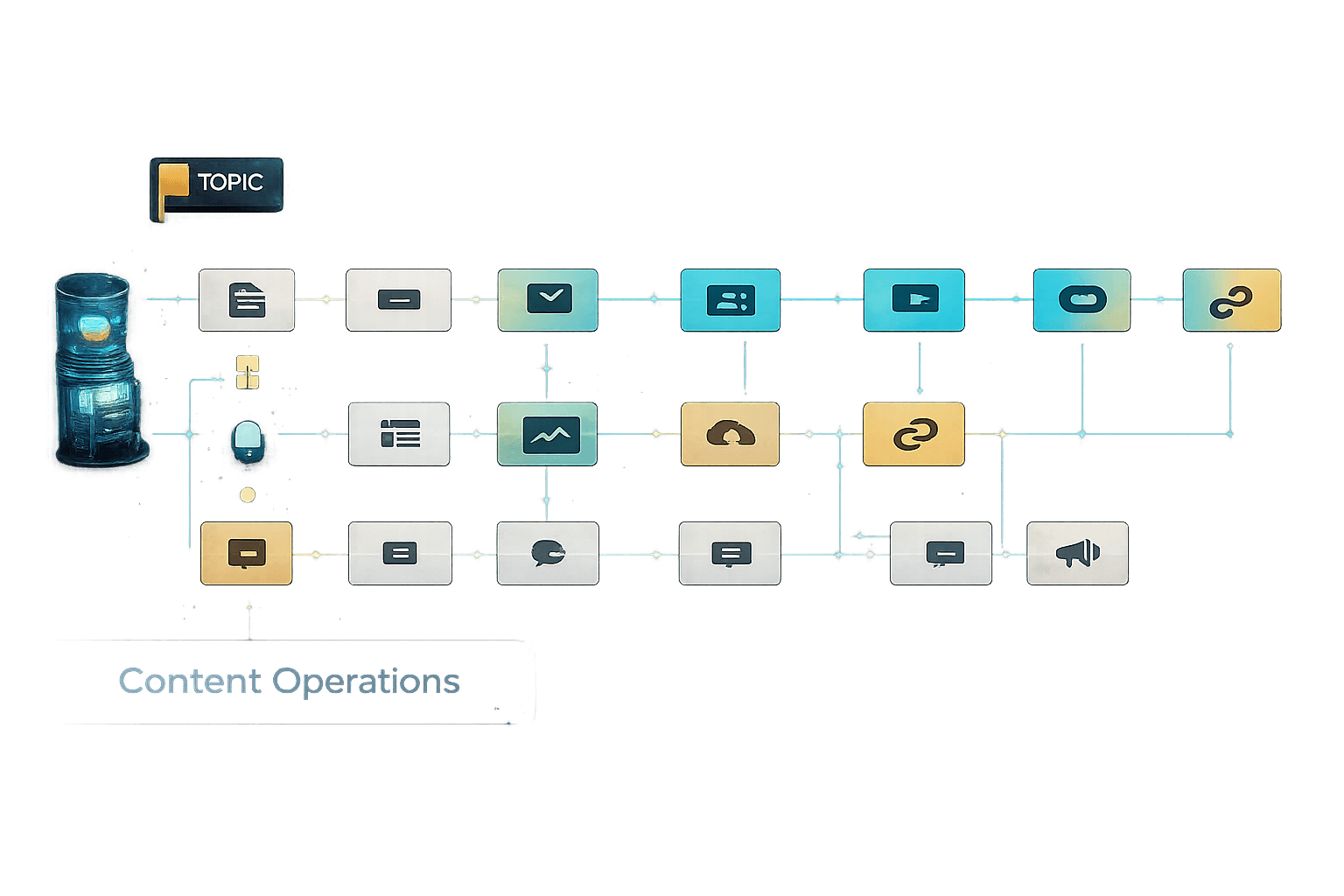
Capture → Plan → Create → Review → Approve → Schedule → Publish → Measure
1. Executives Need a Reliable Way to Capture Ideas
Executive insights rarely appear according to a publishing calendar.
A useful idea may come from:
- A customer meeting
- An industry event
- A leadership challenge
- A project milestone
- A question from an employee
- A change in the market
- A personal experience
Without a system, these ideas are often recorded in random notes, emails, voice messages, or conversations—and then forgotten.
A content system gives the executive and support team one place to capture ideas before they disappear.
The writer can then turn those ideas into useful content when the timing is right.
2. Content Must Support a Clear Strategy
Executives should not publish simply to remain visible.
Their content should support a purpose, such as:
- Building industry credibility
- Strengthening customer trust
- Attracting business opportunities
- Supporting recruitment
- Communicating company direction
- Sharing leadership lessons
- Establishing expertise in a defined market
Strong content marketing strategies connect each post to an audience and objective.
This is where content pillars become important.
What Is a Content Pillar?
A content pillar is a broad subject that reflects the executive’s expertise and the interests of the intended audience.
An executive’s content pillars may include:
- Leadership
- Industry transformation
- Customer experience
- Innovation
- Workplace culture
- Professional development
These pillars provide direction while still leaving room for personal stories and timely commentary.
Trending topics can also be used, but only when they connect naturally to the executive’s knowledge and position. Chasing every trend can make a leader’s content appear reactive or inauthentic.
3. The Executive’s Voice Must Remain Consistent
A ghostwriter should not make every executive sound the same.
The content must reflect the leader’s:
- Vocabulary
- Experience
- Values
- Level of formality
- Sense of humour, where appropriate
- Professional boundaries
- Personal point of view
Maintaining that voice requires more than a brief introduction.
Writers need access to previous content, approved messages, audience information, business priorities, and direct executive feedback.
A content system preserves this context.
It helps the team understand what sounds right, what should be avoided, and how the executive’s voice should appear across different formats and social media platforms.
4. Review and Approval Should Be Simple
The executive should not have to search through long email threads to find a draft.
A clear review process should allow them to:
- View the proposed post
- Understand its purpose
- See any related visual
- Request changes
- Approve the final version
- Confirm the publishing date
When approval is informal, content becomes delayed.
The writer may wait for feedback. The executive may assume the post was already approved. The communications team may review the wrong version.
A structured approval process makes the decision clear and protects both the executive and the organization.
5. Content Should Be Planned, Not Published Randomly
A ghostwriter may create excellent individual posts, but isolated posts do not automatically build a strong professional presence.
Executives need a visible calendar showing:
- Upcoming themes
- Important announcements
- Industry events
- Leadership topics
- Campaign priorities
- Draft and approval deadlines
- Planned publishing dates
This keeps content balanced.
Without a calendar, the executive may publish heavily for one week and then disappear for a month. Important company announcements may compete with personal thought-leadership posts, while valuable ideas remain unused.
A structured calendar creates a reliable publishing rhythm without requiring the executive to think about content every day.
6. Scheduling Must Be Connected to Approval
A social media scheduler can help publish approved content, but it does not always manage how that content was created or reviewed.
When scheduling social media posts, the support team should be able to confirm:
- The executive approved the final version
- The correct image or video is attached
- The intended platform is selected
- The publishing date is appropriate
- The post does not conflict with another announcement
This becomes even more important when teams need to schedule posts on multiple platforms.
The same idea may need a different format or tone for LinkedIn, Instagram, Facebook, or another channel. A connected system keeps those versions organized while maintaining one consistent message.
7. Too Many Productivity Tools Can Create More Work
Executive content is often managed through a collection of productivity tools.
One tool stores ideas. Another contains drafts. A messaging app holds feedback. A spreadsheet tracks dates. A separate platform handles social post scheduling.
Each tool may be useful, but the full process becomes difficult to follow.
The executive or their support team should not need to remember where every idea, file, comment, and approval is stored.
A content system should reduce administrative effort—not create another layer of coordination.
8. Performance Should Inform Future Content
Publishing is not the final step.
The content team should review:
- Which topics attracted meaningful engagement
- Which posts generated useful conversations
- What questions the audience asked
- Which content pillars performed consistently
- Whether the publishing schedule was maintained
- Which formats best represented the executive
This does not mean the executive should chase likes or build their strategy around every short-term result.
Performance data should guide decisions without replacing professional judgment.
The goal is to understand what helps the executive communicate more clearly and meaningfully with the right audience.
How Flowence Supports Executive Content
Capture Ideas
Store insights from meetings, events, and leadership moments in one place.
Plan & Create
Assign writers, use a calendar, and draft with or without AI assistance.
Review & Approve
Give executives a clear path to feedback, revisions, and final sign-off.
Schedule & Track
Move approved posts into publishing and keep status visible.
How Flowence Supports Executive Content
Flowence is Alayrix’s AI-powered content operations platform. It is designed to connect planning, creation, collaboration, approvals, scheduling, and publishing in one structured environment.
For executive content, the workflow can support:
- Capturing and organizing ideas
- Planning content through a calendar
- Assigning work to writers or creators
- Creating content manually or with AI assistance
- Reviewing copy and visuals
- Collecting executive feedback
- Approving final content
- Scheduling approved posts
- Tracking content status
Flowence is designed to give executives visibility and final control without requiring them to participate in every operational step. Its client-facing workflow supports content review, feedback, approval, calendar visibility, and progress tracking within a dedicated environment.
The writer remains essential. Flowence provides the structure that helps the writer, executive, and wider content team work together more effectively.
Final Thoughts
A ghostwriter can help an executive communicate.
A content system helps them communicate consistently.
It preserves ideas, protects the executive’s voice, organizes responsibilities, simplifies approvals, and connects completed content to the publishing calendar.
The strongest executive presence is not built by writing occasional posts whenever time permits.
It is built through a dependable process that turns real expertise into clear, approved, and consistent communication.
Executives do not need to manage every content task themselves. But they do need a system that keeps their voice, priorities, team, and publishing activity aligned.