
Winning a new client should increase an agency’s revenue.
But too often, it also creates another spreadsheet, another approval chain, another publishing calendar, and another set of messages asking: “Has this been approved yet?”
As agencies grow, administrative work can grow faster than creative work. More clients mean more briefs, deadlines, revisions, meetings, files, approvals, and social media accounts to manage.
The usual response is to hire more coordinators or account managers.
Sometimes that is necessary. But before adding more administrative staff, agencies should examine whether the real problem is team capacity—or a fragmented way of working.
A better content operation can help agencies increase client capacity without allowing coordination work to consume the team.
Key Takeaways
- New clients add complexity when work is spread across disconnected tools.
- Standard workflows, ownership, and client portals reduce follow-ups.
- Connect approvals with scheduling social media posts—not a separate hop.
- Flowence helps agencies scale clients without matching admin overhead.
Why Every New Client Creates More Complexity
A single client may require monthly content planning, topic research, writing and design, internal review, client feedback, revisions, approval, scheduling, publishing, and progress reporting.
Multiply that process across ten or twenty clients, and small inefficiencies become major operational problems.
A missing approval may delay an entire campaign. A designer may work from an outdated draft. A manager may spend hours searching through messages to confirm which version the client approved.
The issue is rarely a lack of effort.
It is usually that the agency’s people, content, and decisions are spread across too many disconnected systems.
1. Standardize Client Onboarding
Every client is different, but the onboarding process should not be rebuilt from the beginning each time.
Agencies can reduce administrative work by using a standard onboarding structure that records:
- Business goals
- Target audience
- Brand voice
- Content pillars
- Preferred platforms
- Approval contacts
- Publishing frequency
- Restricted topics
- Design requirements
- Reporting expectations
This information should be stored somewhere the relevant team members can access.
When onboarding information is scattered across meeting notes, emails, and documents, creators repeatedly ask questions that have already been answered.
A structured onboarding process gives the team a reliable starting point and helps maintain consistency as more clients are added.
2. Create One Repeatable Content Workflow
Agencies often have a process, but that process may exist only in people’s heads.
One manager sends drafts by email. Another uses shared documents. A third asks clients to approve screenshots through a messaging app.
That inconsistency creates unnecessary work.
Every content item should follow the same visible path.
This does not mean every campaign must look the same. The creative work can remain flexible while the operating process stays consistent.
When everyone knows what each stage means, less time is spent explaining what happens next.
A Repeatable Agency Workflow
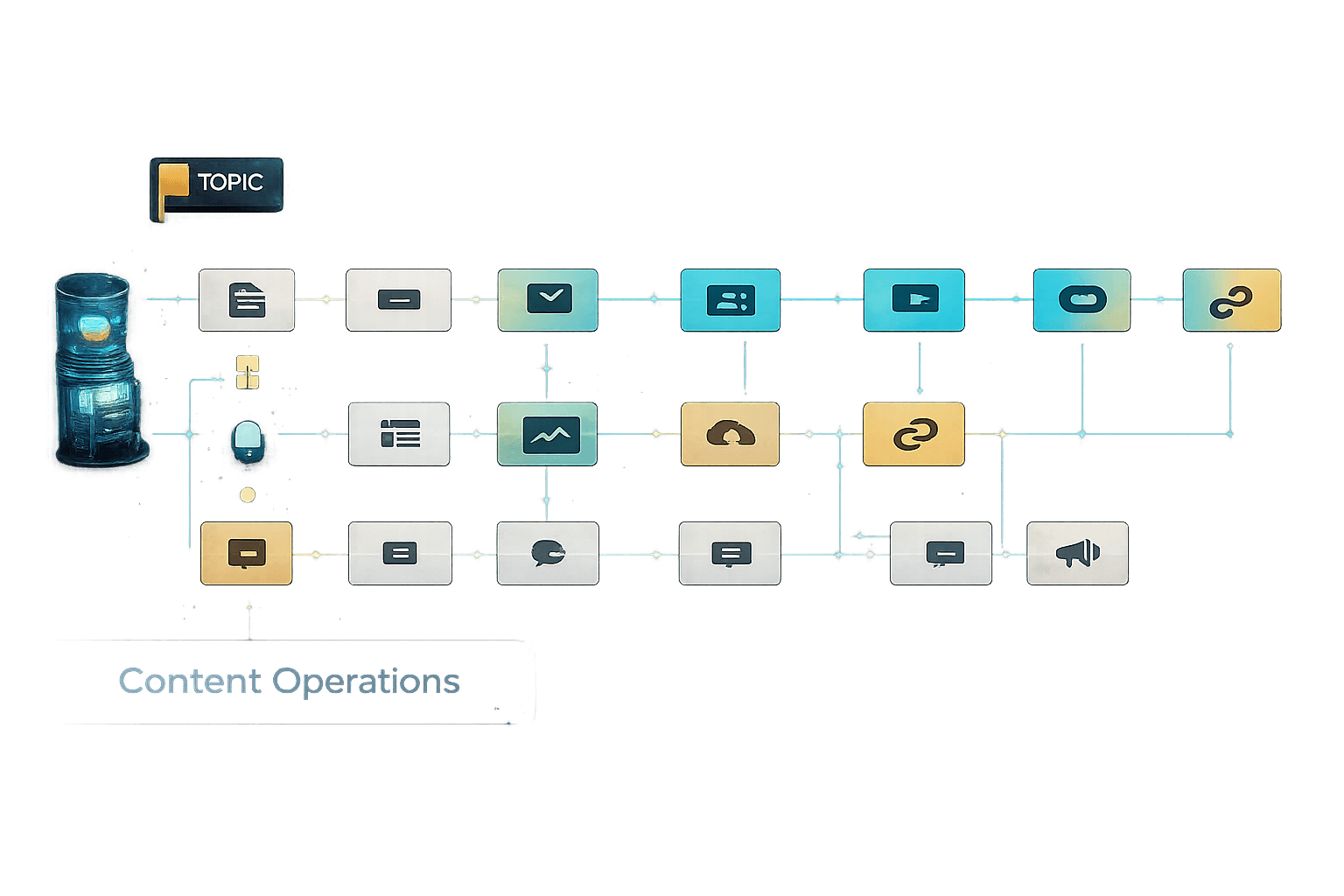
Plan → Assign → Create → Review → Revise → Client Approval → Schedule → Publish
3. Keep Every Client in a Dedicated Workspace
Agencies need a clear separation between clients.
Each client should have a dedicated space for:
- Content plans
- Tasks
- Drafts
- Media
- Feedback
- Approvals
- Publishing dates
- Completed content
A centralized client workspace reduces the risk of sending the wrong content to the wrong client or losing important information inside long communication threads.
It also makes handovers easier. When an employee is unavailable or leaves the agency, another team member can understand the client’s work without reconstructing months of conversations.
The Flowence Teams model is designed around multi-client workspaces, content calendars, task assignments, structured reviews, client approvals, and shared progress visibility.
4. Make Ownership Visible
Administrative work increases when responsibility is unclear.
A manager may spend time following up simply because they cannot see:
- Who is creating the post
- Whether the first draft is complete
- Who is reviewing it
- Whether the client has responded
- What is blocking publication
Every task should have an owner, a deadline, a reviewer, an approval status, a publishing date, and a clear next action.
Visible ownership reduces the need for manual status checks.
Instead of asking five people for updates, the manager should be able to view the current status from one place.
5. Bring Client Approvals into the Workflow
Client approval is one of the biggest causes of delay.
A typical approval process may involve email attachments, document comments, screenshots, voice notes, and follow-up calls. The creator then has to combine feedback from several places and determine which request is final.
This is not only inefficient. It also increases the possibility of publishing the wrong version.
A client portal can give clients a simpler way to:
- Preview planned content
- Review copy and visuals
- Request changes
- Approve or reject content
- See upcoming publishing dates
- Track progress
This improves transparency without inviting the client into every internal agency conversation.
Flowence is designed to connect teams and clients through a structured review and approval process, helping reduce scattered communication and manual follow-ups.
6. Connect Approvals with Social Media Scheduling
A basic social media scheduler can help an agency publish finished posts. But it may not manage everything required to make those posts ready.
The team may still need to transfer approved copy and media from another system into the scheduler manually.
That creates another administrative step—and another opportunity for error.
A more connected process moves approved content directly into the calendar for social post scheduling.
When scheduling social media posts, the team should be able to see:
- Whether the post is approved
- Which client it belongs to
- Which platform it is for
- Which media file is final
- When it will be published
- Whether another version is needed
This becomes especially useful when agencies must schedule posts on multiple platforms.
7. Use Templates Without Producing Generic Content
Templates can reduce repetitive administrative work without making the final content feel repetitive.
Agencies can standardize:
- Client onboarding forms
- Content briefs
- Campaign structures
- Review checklists
- Approval stages
- Monthly calendars
- Reporting formats
The process can be templated while the ideas, messaging, and visuals remain specific to each client.
This balance allows the agency to work faster without weakening quality or originality.
8. Use AI for Repetitive Work, Not Client Judgment
AI can help agencies generate initial topic ideas, explore trending topics, draft captions, create variations, refine tone, repurpose longer content, and support visual development.
But AI should not make every strategic or approval decision.
The agency still needs people to understand the client, protect the brand voice, verify accuracy, and determine whether the content supports the client’s goals.
The best use of AI is to reduce repetitive production work while keeping human expertise at the centre of the relationship.
9. Measure Operational Bottlenecks
Agencies often measure impressions and engagement but overlook the performance of their own workflow.
Useful operational measures include:
- Average approval time
- Number of revision rounds
- Percentage of posts published on schedule
- Time from brief to completed draft
- Amount of content managed per employee
- Number of posts waiting for client feedback
- Missed deadlines by workflow stage
These measurements show where administrative pressure is coming from.
For example, hiring another coordinator may not solve the problem if most delays come from an unclear client approval process.
How Flowence Supports Agency Growth
Client Workspaces
Keep plans, drafts, media, feedback, and dates separated by client.
Visible Ownership
See owners, deadlines, reviewers, and blockers without status chase emails.
Structured Approvals
Let clients preview, comment, and approve inside the shared workflow.
Connected Scheduling
Move approved posts into social post scheduling across platforms.
How Flowence Supports Agency Growth
Flowence, a product of Alayrix, is an AI-powered content operations platform designed to centralize the complete content lifecycle.
For agencies, Flowence connects:
- Client onboarding
- Dedicated client workspaces
- Content planning
- Task assignment
- AI-assisted and manual creation
- Internal review
- Client feedback and approval
- Scheduling
- Multi-platform publishing where supported
- Workflow visibility
Its purpose is not to replace the agency or its team.
It is to help the agency manage more work through a clearer and more scalable system. Flowence’s approved agency positioning focuses specifically on helping agencies manage more clients without adding administrative overhead at the same rate.
Final Thoughts
An agency does not scale simply by producing more content.
It scales by creating a system in which more content and more clients can be managed without creating the same increase in confusion, follow-ups, and administrative work.
Before hiring another coordinator, agencies should ask:
- Can our team see every task and deadline?
- Do clients have a clear approval process?
- Is feedback stored with the correct content?
- Are approved posts connected to the publishing schedule?
- Are we using one structured workflow—or several disconnected tools?
The right productivity tools should not add another layer to manage.
They should reduce unnecessary coordination so the agency can spend more time on strategy, creativity, client relationships, and growth.